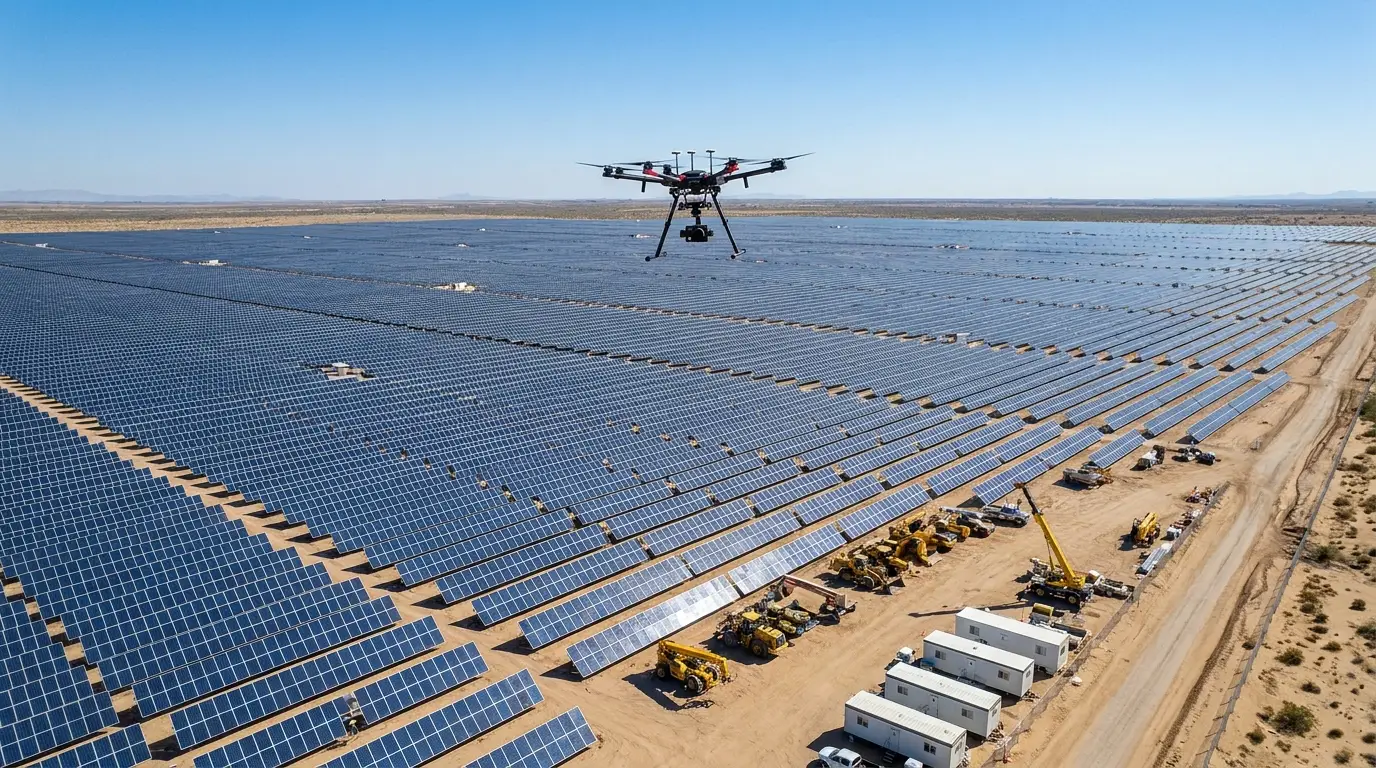
Pre-Commissioning Drone Inspection for Utility-Scale Solar Plants
Pre-commissioning drone inspection of utility-scale solar plants is a critical step in ensuring that these large-scale renewable energy projects are operational and generating power as efficiently as possible. By leveraging drones equipped with high-resolution cameras and specialized sensors, such as thermal imaging and multispectral sensors, inspectors can identify potential issues before the plant begins operation. This proactive approach not only saves time and resources but also helps in preventing future downtime, thereby maximizing the plant's overall energy output.
Looking for a provider? AiRotor Labs offers solar panel drone inspection services across India — thermal and RGB flights, AI defect classification and IEC 62446-3 reports, from ₹3,000 per MW.
Introduction to Pre-Commissioning Inspection
The pre-commissioning phase of a solar plant involves a series of checks and tests to ensure that all components are functioning as intended. Traditional inspection methods can be time-consuming, costly, and sometimes risky for the personnel involved. Drone-based inspections offer a safer, more efficient, and cost-effective alternative. With the ability to cover large areas quickly and capture detailed data, drones can significantly reduce the typical timelines for pre-commissioning inspections, which can range from a few weeks to several months, depending on the size of the solar plant.
Regulatory Framework for Drone Inspections in India
In India, the use of drones for commercial purposes, including pre-commissioning drone inspection of utility-scale solar plants, is regulated by the Directorate General of Civil Aviation (DGCA). The DGCA has established guidelines that drone operators must follow, including obtaining the necessary permissions and ensuring that drones are equipped with mandatory features such as GPS and return-to-home functionality. Compliance with these regulations is essential for legal and safe drone operations. At AiRotor Labs, we are well-versed in the DGCA rules and ensure that all our drone inspection services, including pre-commissioning drone inspection, are conducted in accordance with these guidelines.
Accuracy and Detail in Drone Inspections
The accuracy of drone inspections is largely dependent on the type of sensors and cameras used. For solar plant inspections, high-resolution RGB cameras can capture detailed images of the solar panels and their mounting structures, while thermal imaging cameras can detect temperature anomalies that may indicate faulty or underperforming panels. Multispectral and hyperspectral sensors can provide insights into the health and efficiency of the solar panels by analyzing reflected light across various spectral bands. With the right equipment, inspectors can achieve an accuracy of up to 95% in detecting issues, significantly higher than traditional methods.
Typical Process for Pre-Commissioning Drone Inspection
The process for pre-commissioning drone inspection of a utility-scale solar plant typically begins with planning and coordination, including obtaining necessary permissions and ensuring compliance with DGCA regulations. The inspection itself involves flying the drone over the solar plant to capture the required data, which can include high-resolution images, thermal scans, and multispectral data. Post-flight, the captured data is analyzed to identify any potential issues or defects. This process can usually be completed within a few days to a week, depending on the size of the solar plant and the complexity of the inspection.
Benefits of Pre-Commissioning Drone Inspection
The benefits of pre-commissioning drone inspection for utility-scale solar plants are numerous. It allows for the early detection of issues, reducing the risk of downtime and lost revenue once the plant is operational. It also enhances the overall efficiency of the plant by ensuring that all components are functioning optimally from the outset. Furthermore, drone inspections can be repeated over time to monitor the health and performance of the solar plant, providing valuable data for maintenance and future upgrades.
Conclusion and Next Steps
In conclusion, pre-commissioning drone inspection of utility-scale solar plants is a vital step in ensuring the efficient and safe operation of these renewable energy facilities. By leveraging the latest in drone technology and complying with regulatory requirements, companies like AiRotor Labs can provide comprehensive and accurate inspections. If you are looking to ensure your solar plant is ready for operation with pre-commissioning drone inspection, visit us at https://www.airotor.in/booking to learn more about our services and schedule your inspection today.
AiRotor Labs provides drone-based inspection, aerial survey, and land survey across India.
Book a consultation →