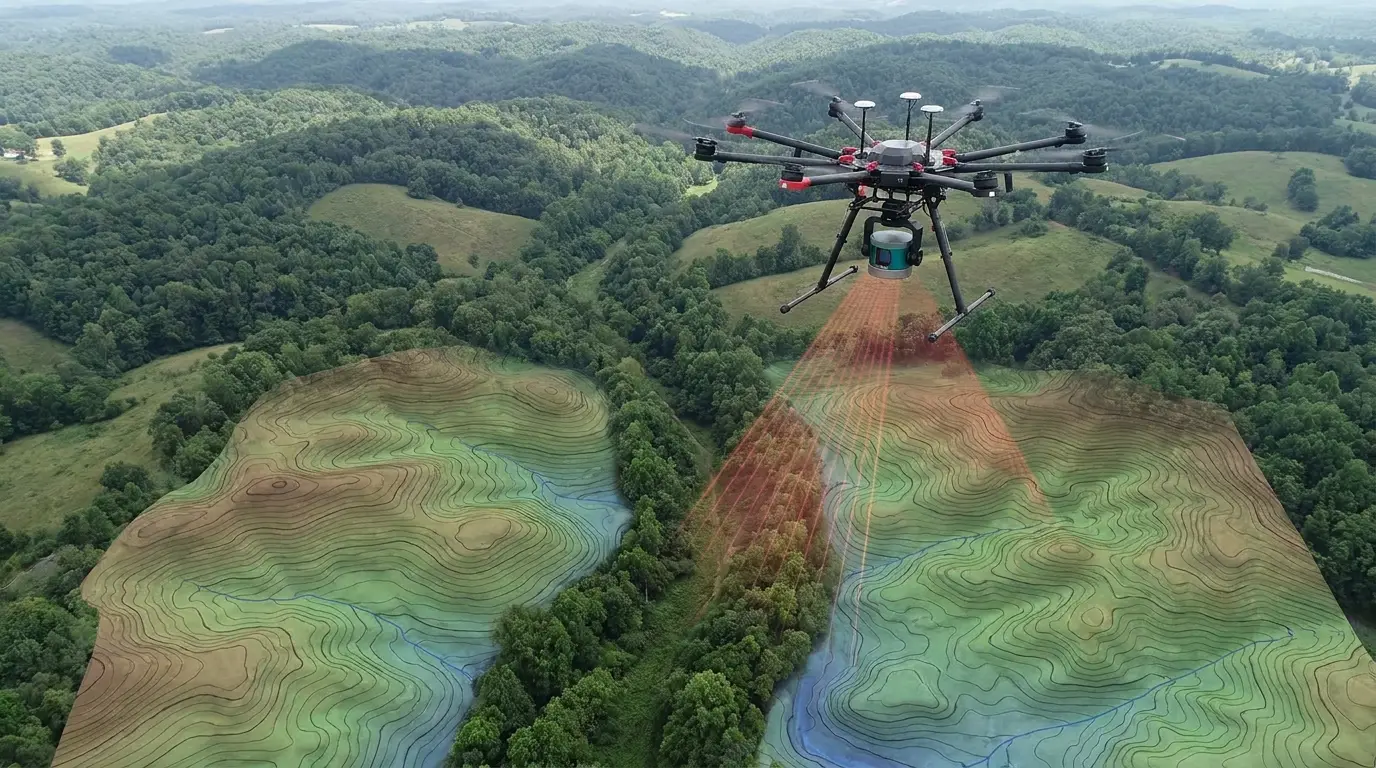
Corridor Mapping for New Powerline Routes Using Drone LiDAR
Drone-based corridor mapping has revolutionized the way new powerline routes are planned and implemented in India. By leveraging drone LiDAR technology, surveyors can accurately map vast areas, identifying the most suitable corridors for powerline installation. This approach has significantly reduced the time, cost, and environmental impact associated with traditional survey methods. In India, where the demand for electricity is increasing rapidly, efficient corridor mapping is crucial for ensuring reliable and efficient power transmission.
Looking for a provider? AiRotor Labs offers transmission line drone inspection services across India — thermal, LiDAR and corona inspection of live lines, ₹5,000–₹15,000 per km.
Understanding Drone LiDAR Technology
Drone LiDAR (Light Detection and Ranging) uses laser pulses to create high-resolution 3D models of the terrain. This technology is particularly useful for corridor mapping, as it can penetrate vegetation and capture accurate topographic data. The Riegl VQ-480 or the Velodyne HDL-32E are examples of LiDAR sensors used for such applications, offering accuracy levels of up to 1-2 cm. By mounting these sensors on drones, surveyors can cover large areas quickly and efficiently, reducing the need for ground-based surveys.
Applications of Corridor Mapping in India
In India, corridor mapping is essential for the development of new powerline routes, which often span across diverse terrains, including forests, hills, and urban areas. Drone LiDAR enables surveyors to identify potential corridors, taking into account factors such as terrain difficulty, environmental sensitivity, and social impact. For instance, a typical powerline project in India may require surveying a 100 km long corridor, which can be completed in 2-3 days using drone LiDAR, compared to several weeks or even months using traditional methods.
Regulatory Framework for Drone Operations in India
The Directorate General of Civil Aviation (DGCA) regulates drone operations in India, and surveyors must comply with the guidelines outlined in the DGCA's Civil Aviation Requirements (CAR). This includes obtaining the necessary permits, ensuring drone safety, and maintaining a safe distance from sensitive areas such as airports and military installations. AiRotor Labs, with its expertise in drone-based surveys, ensures that all operations are conducted in accordance with DGCA regulations.
Benefits of Drone LiDAR for Corridor Mapping
The use of drone LiDAR for corridor mapping offers several benefits, including increased accuracy, reduced costs, and enhanced safety. By capturing detailed topographic data, surveyors can identify potential issues and optimize the powerline route, reducing the risk of costly rework or environmental damage. Additionally, drone LiDAR enables surveyors to work in remote or hard-to-reach areas, reducing the risk of accidents and improving overall efficiency.
Best Practices for Corridor Mapping with Drone LiDAR
To ensure accurate and reliable results, surveyors must follow best practices when conducting corridor mapping with drone LiDAR. This includes selecting the appropriate LiDAR sensor, planning the flight mission carefully, and processing the data using specialized software. AiRotor Labs, with its team of experienced surveyors and engineers, follows a rigorous methodology to ensure that all corridor mapping projects are completed to the highest standards.
Conclusion and Next Steps
In conclusion, drone LiDAR is a game-changer for corridor mapping in India, offering a fast, accurate, and cost-effective solution for planning new powerline routes. If you're looking to leverage the benefits of drone LiDAR for your next project, contact AiRotor Labs at https://www.airotor.in/booking to discuss your requirements and schedule a survey. With our expertise and state-of-the-art equipment, we can help you achieve your goals efficiently and effectively.
AiRotor Labs provides drone-based inspection, aerial survey, and land survey across India.
Book a consultation →