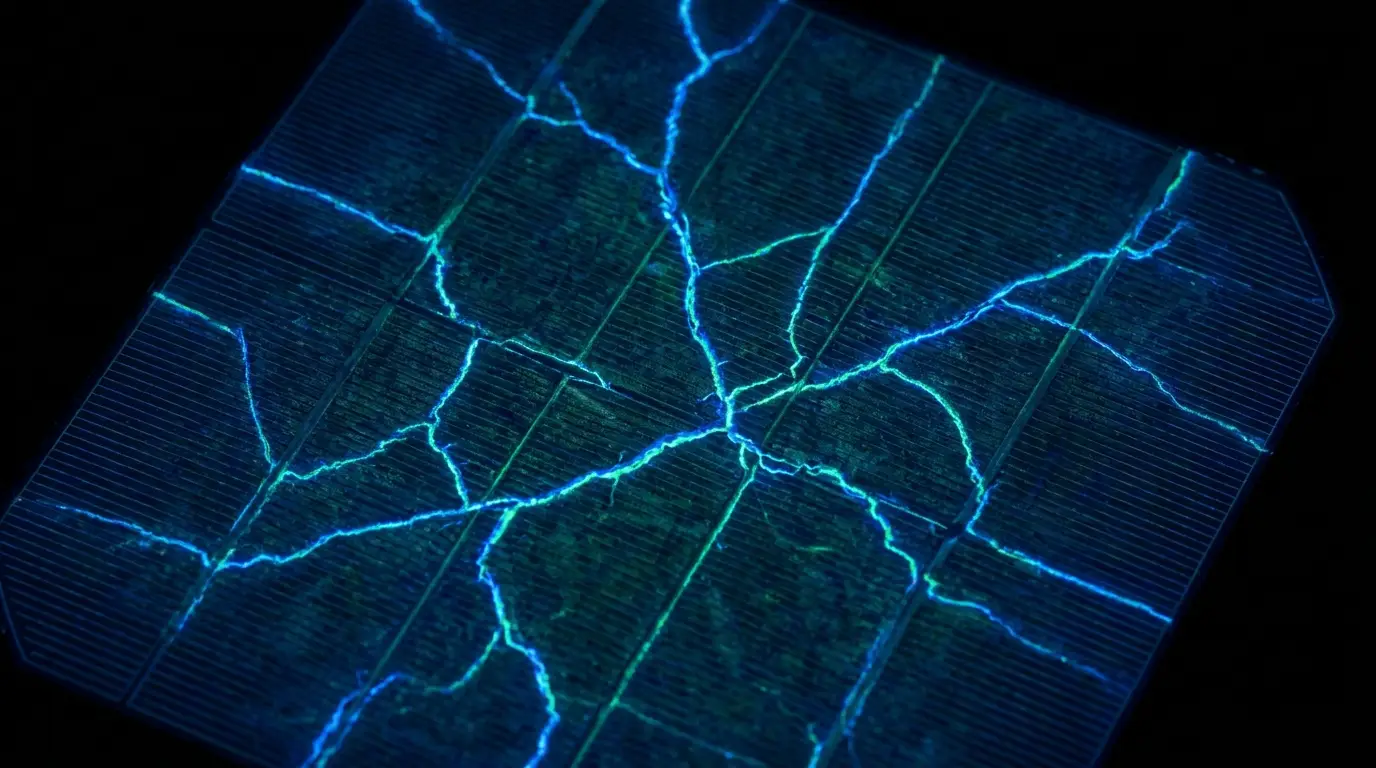
Drone-based EL Imaging for Solar Cell Crack Detection
Drone-based electroluminescence (EL) imaging is a cutting-edge technique used for detecting cracks in solar cells, a crucial aspect of maintaining the efficiency and lifespan of solar panels. In India, where solar energy is becoming increasingly prominent, the need for efficient and non-invasive inspection methods is on the rise. EL imaging uses a specialized sensor to capture high-resolution images of solar panels, allowing for the detection of even the smallest cracks and defects.
Looking for a provider? AiRotor Labs offers solar panel drone inspection services across India — thermal and RGB flights, AI defect classification and IEC 62446-3 reports, from ₹3,000 per MW.
Principles of EL Imaging
EL imaging is based on the principle that solar cells emit light when an electric current is passed through them. By capturing images of this emission, it is possible to identify areas where the current is not flowing properly, indicating a crack or defect. This method is particularly useful for solar panels, as it allows for the detection of cracks that may not be visible to the naked eye. In India, where solar panels are often exposed to harsh environmental conditions, EL imaging can help identify potential issues before they become major problems.
Sensor Types and Accuracy
The type of sensor used for EL imaging can significantly impact the accuracy of the results. High-resolution sensors, such as cooled CCD cameras or infrared cameras, are typically used for EL imaging. These sensors can capture images with a high level of detail, allowing for the detection of small cracks and defects. The accuracy of EL imaging can range from 90-95%, depending on the quality of the sensor and the conditions under which the images are captured. For example, images captured in low-light conditions may have a lower accuracy than those captured in bright sunlight.
Typical Timelines and DGCA Rules
The timeline for completing an EL imaging project can vary depending on the size of the solar panel array and the complexity of the inspection. Typically, a small to medium-sized solar panel array can be inspected in a few hours, while larger arrays may require several days or even weeks to complete. In India, drone operations are regulated by the Directorate General of Civil Aviation (DGCA), which requires drone operators to obtain a Unique Identification Number (UIN) and follow strict guidelines for drone operations. AiRotor Labs, a leading drone services company in Ahmedabad, is well-versed in these regulations and can ensure that all EL imaging projects are completed in compliance with DGCA rules.
Benefits of Drone-based EL Imaging
Drone-based EL imaging offers several benefits over traditional inspection methods, including increased efficiency, reduced cost, and improved safety. Drones can capture images of large areas quickly and easily, reducing the need for manual inspection and minimizing the risk of accidents. Additionally, drone-based EL imaging can be used to inspect solar panels in remote or hard-to-reach locations, making it an ideal solution for solar farms and other large-scale solar installations.
Case Studies and Industry Applications
Several case studies have demonstrated the effectiveness of drone-based EL imaging for solar cell crack detection. For example, a recent study in India found that EL imaging was able to detect cracks in solar panels that were not visible to the naked eye, allowing for early intervention and prevention of further damage. EL imaging is also being used in other industries, such as wind and powerline inspection, where the detection of cracks and defects is critical to maintaining efficiency and preventing accidents.
Future of EL Imaging in India
As the demand for solar energy continues to grow in India, the need for efficient and effective inspection methods will also increase. Drone-based EL imaging is well-positioned to meet this need, offering a non-invasive and efficient method for detecting cracks and defects in solar cells. With the right equipment and expertise, EL imaging can help solar panel owners and operators in India maximize the efficiency and lifespan of their solar panels, reducing maintenance costs and improving overall performance.
In conclusion, drone-based EL imaging is a powerful tool for detecting cracks in solar cells, offering a non-invasive and efficient method for solar panel inspection. If you're interested in learning more about how AiRotor Labs can help you with EL imaging and other drone-based services, please visit our website at https://www.airotor.in/booking to book a consultation and take the first step towards maximizing the efficiency and lifespan of your solar panels.
AiRotor Labs provides drone-based inspection, aerial survey, and land survey across India.
Book a consultation →