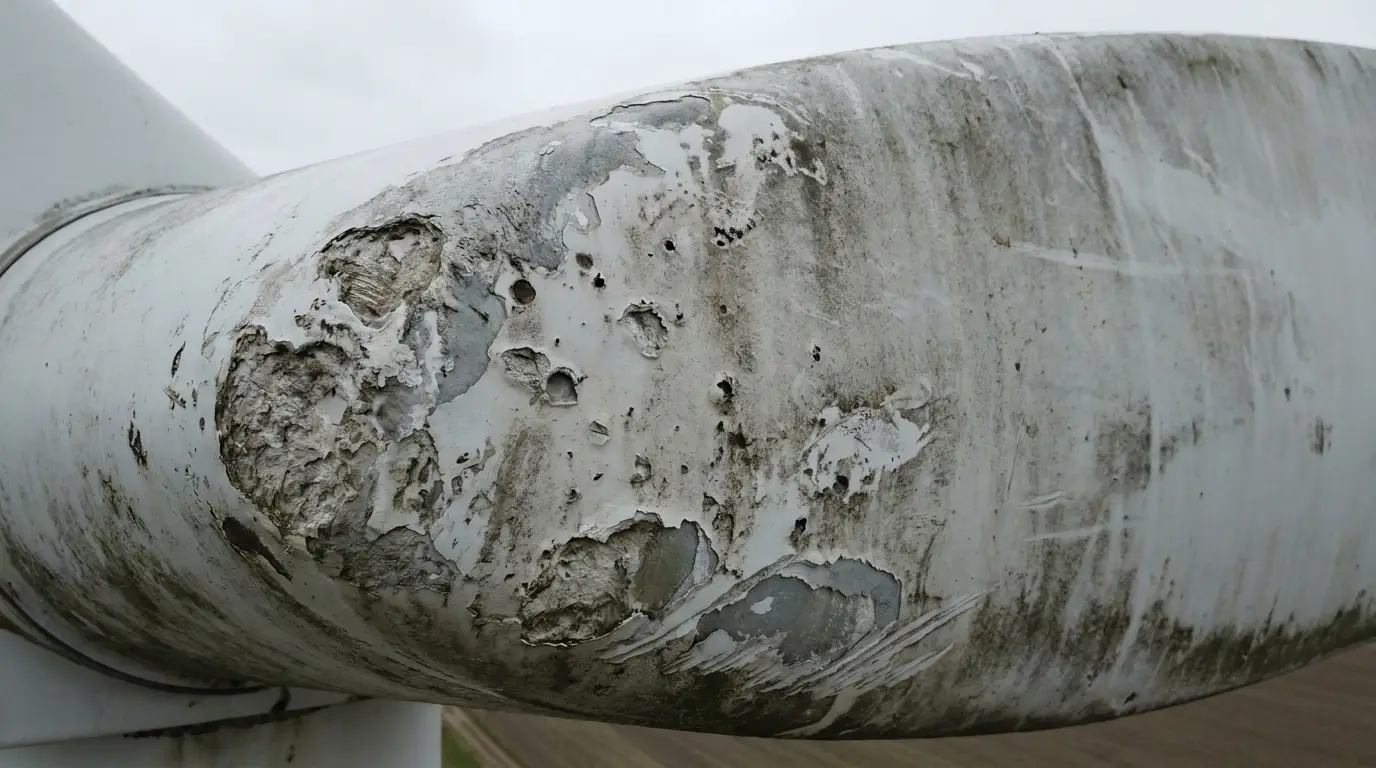
Precision in the Sky: Drone-based Leading-Edge Erosion Detection on Wind Turbine Blades
India's commitment to renewable energy, particularly wind power, is stronger than ever. Vast wind farms across Gujarat, Rajasthan, Tamil Nadu, and other states are critical to our nation's energy security and sustainable future. However, the relentless forces of nature – wind, rain, dust, and even insects – constantly challenge the integrity of these massive structures, especially the wind turbine blades. Among the most insidious threats is leading-edge erosion, a silent degradative process that, if left unchecked, can severely impact performance and lead to costly repairs. At AiRotor Labs, based in Ahmedabad, we leverage cutting-edge drone technology to offer precise and efficient drone-based leading-edge erosion detection on wind turbine blades, ensuring your assets operate at peak efficiency.
The Silent Threat: Understanding Leading-Edge Erosion
The leading edge of a wind turbine blade is its most critical aerodynamic surface, designed to efficiently capture wind energy. Over time, constant exposure to environmental elements at high rotational speeds (tip speeds can exceed 300 km/h) causes wear and tear. This manifests as pitting, delamination, and material loss, collectively known as leading-edge erosion.
Why is this a significant concern for wind farm operators in India?
- Aerodynamic Inefficiency: Even minor erosion disrupts the blade's carefully designed aerodynamic profile. This leads to reduced lift and increased drag, directly translating to a loss in Annual Energy Production (AEP). Industry estimates suggest that moderate leading-edge erosion can reduce AEP by 3-5%, while severe erosion can lead to reductions of up to 20% or more.
- Structural Integrity Compromise: Erosion can expose the internal composite layers of the blade to moisture and further degradation, potentially leading to more severe structural damage like delamination or even catastrophic blade failure if not addressed promptly.
- Increased Noise Emissions: Damaged blade surfaces can generate more aerodynamic noise, which can be a concern for turbines located near residential areas, impacting compliance with local regulations.
- Premature Component Wear: Imbalanced or inefficient blades can put undue stress on the gearbox, main bearing, and other critical components, accelerating their wear and tear and increasing maintenance costs.
Given India's diverse climate – from coastal salt spray to arid desert dust storms and heavy monsoon rains – wind turbine blades here face unique and often accelerated erosive challenges. Proactive detection is not just good practice; it's essential for long-term operational viability.
Traditional Inspection vs. The Drone Advantage
Historically, inspecting wind turbine blades for damage relied on methods like ground-based visual inspections with binoculars, or more detailed but hazardous rope access inspections.
- Ground-based Inspections: Limited in resolution and perspective, making it difficult to spot subtle erosion or defects high up on the blade.
- Rope Access: While thorough, it's time-consuming, expensive, highly dependent on weather conditions, and carries inherent safety risks for personnel working at height. It also requires significant turbine downtime, directly impacting energy generation and revenue.
Drones have revolutionized this landscape. By deploying unmanned aerial vehicles (UAVs), AiRotor Labs can conduct inspections with unparalleled safety, speed, and precision, eliminating the need for personnel to ascend the turbine and significantly reducing downtime. This technological leap makes drone-based leading-edge erosion detection on wind turbine blades the gold standard for modern wind farm maintenance.
How AiRotor Labs Conducts Drone-based Leading-Edge Erosion Detection
Our approach at AiRotor Labs combines advanced drone technology with sophisticated data analysis, providing comprehensive insights into blade health.
The Process:
- Mission Planning: Our certified pilots meticulously plan flight paths, considering turbine height, surrounding obstacles, and weather conditions to ensure safe and comprehensive data capture.
- Data Acquisition: High-end industrial drones are flown autonomously or semi-autonomously around each blade, capturing thousands of high-resolution images and other sensor data. A typical inspection for a single turbine takes approximately 30-60 minutes, depending on its size and the complexity of the data required.
- Data Processing & Analysis: The collected data is then fed into specialized software platforms. Here, advanced photogrammetry techniques reconstruct detailed 3D models of the blades. Our AI and machine learning algorithms are trained to identify, classify, and quantify defects, specifically focusing on leading-edge erosion.
- Reporting: We deliver a comprehensive report detailing the location, type, severity, and extent of all detected erosion and other anomalies. This includes visual evidence, precise measurements, and actionable recommendations for maintenance. Clients typically receive their detailed reports within 5-7 business days of the inspection.
The Technology:
- High-Resolution RGB Cameras: These are our primary tools for visual inspection, capturing crystal-clear images (e.g., 45-megapixel sensors) that allow for the detection of even minor pitting, cracks, or surface irregularities with sub-millimeter precision when properly processed.
- LiDAR (Light Detection and Ranging): For precise quantification of erosion depth and volume, LiDAR sensors are invaluable. They generate highly accurate 3D point clouds, enabling us to measure the exact material loss on the leading edge. This provides quantitative data crucial for assessing erosion severity and predicting future degradation.
- Thermal Cameras: While not directly for erosion, thermal sensors (e.g., with radiometric capabilities) are often used in conjunction to detect related issues like internal delamination, moisture ingress, or manufacturing defects that might exacerbate erosion or be a consequence of it.
- AI-Powered Software: Our analytical software automates much of the defect identification process, ensuring consistency and speeding up analysis. It can compare current blade states against previous inspections or design specifications, highlighting changes and potential areas of concern.
This multi-sensor approach, coupled with intelligent analytics, allows for an unparalleled level of detail and accuracy in drone-based leading-edge erosion detection on wind turbine blades.
The Indian Regulatory Landscape for Drone Operations
Operating drones in India, especially for commercial purposes like industrial inspections, is governed by the Directorate General of Civil Aviation (DGCA) under the Unmanned Aircraft System (UAS) Rules, 2021 (and subsequent amendments). AiRotor Labs is fully compliant with these regulations.
- Remote Pilot License: All our drone pilots are DGCA-certified and hold valid Remote Pilot Licenses, ensuring they are trained and qualified to operate UAVs safely and responsibly.
- Registered Drones: Our drones are registered with the DGCA and possess unique identification numbers (UINs).
- Permissions: We obtain all necessary permissions, including a Drone Acknowledgement Number (DAN) and, where required, a Drone Operations Permit (DOP) or Type Approval (TA), before commencing any flight operations. We ensure adherence to no-fly zones and other airspace restrictions.
Choosing a compliant drone service provider like AiRotor Labs not only guarantees the legality and safety of operations but also protects your assets from potential regulatory penalties.
Tangible Benefits for Wind Farm Operators in India
Implementing drone-based leading-edge erosion detection on wind turbine blades brings a multitude of advantages for wind farm owners and operators:
- Enhanced Safety: Eliminates the need for personnel to work at hazardous heights, drastically reducing accident risks.
- Significant Cost Savings:
- Reduced Downtime: Inspections are much faster than traditional methods, minimizing the period a turbine is offline and maximizing energy generation.
- Proactive Maintenance: Early detection allows for timely, less intensive repairs, preventing minor erosion from escalating into major, costly structural damage.
- Optimized Repair Scheduling: Precise data enables operators to prioritize repairs effectively, allocating resources where they are most needed.
- Increased Annual Energy Production (AEP): By maintaining optimal blade aerodynamics, turbines operate more efficiently, leading to higher energy output and increased revenue.
- Extended Asset Lifespan: Regular monitoring and timely repairs help preserve the structural integrity of blades, extending their operational life and delaying costly blade replacements.
- Superior Data Quality & Consistency: Drones capture objective, repeatable data, free from human error or subjectivity. This allows for accurate trending and comparison over time, providing valuable insights into degradation rates.
- Environmental Responsibility: Optimally performing turbines generate more clean energy, contributing effectively to India's renewable energy goals.
Partner with AiRotor Labs for Smarter Wind Turbine Maintenance
Leading-edge erosion is an unavoidable challenge in wind energy, but its impact is entirely manageable with the right tools and expertise. AiRotor Labs is dedicated to empowering India's wind energy sector with advanced drone solutions that protect your investments, enhance operational efficiency, and ensure sustainable energy production. Our precision, compliance, and commitment to delivering actionable insights make us your ideal partner for wind turbine inspections in Ahmedabad and across India.
Ready to optimize your wind farm's performance and safeguard your assets? Contact AiRotor Labs today to discuss your specific inspection needs.
Book Your Drone Inspection Now
AiRotor Labs provides drone-based inspection, aerial survey, and land survey across India.
Book a consultation →