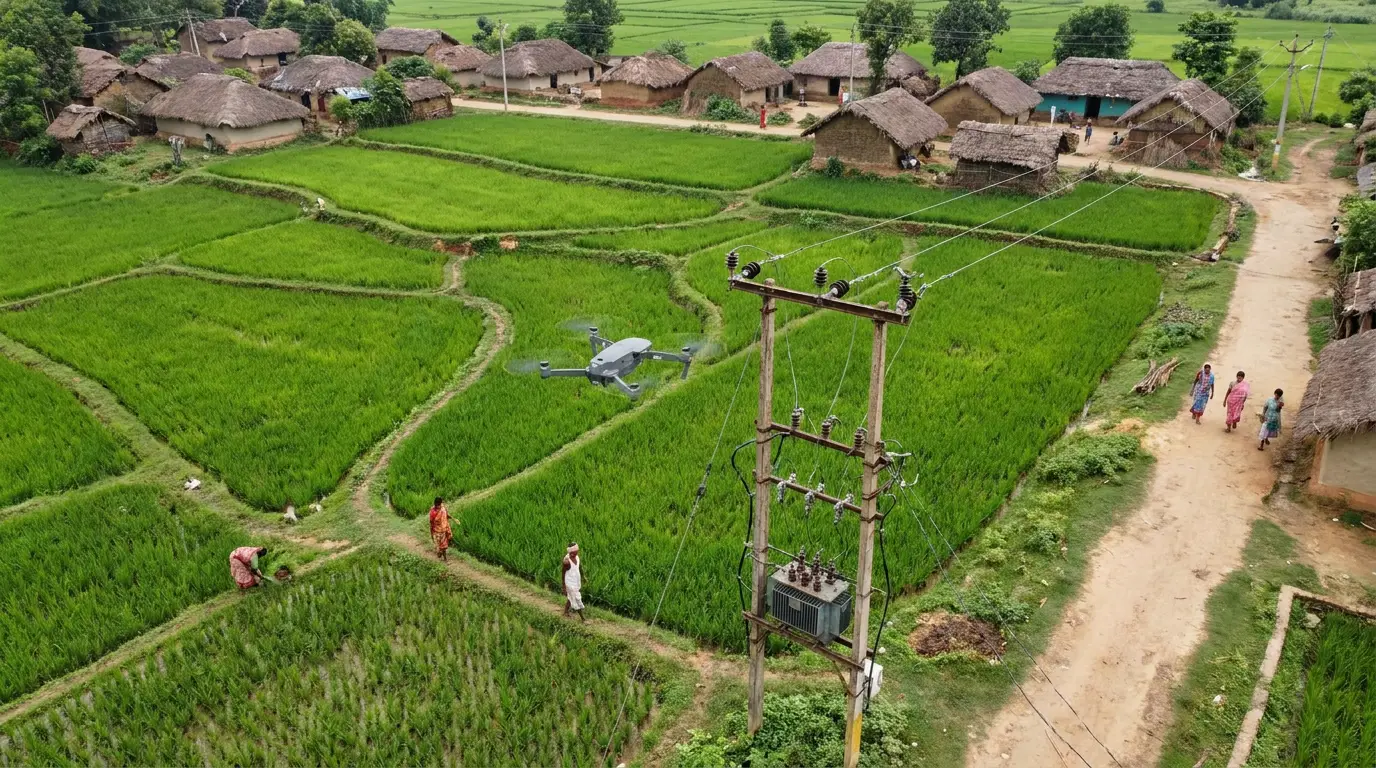
Revolutionizing Rural Power: Drone Inspection of Power Distribution Networks in Rural India
Reliable electricity is the backbone of progress, especially in rural India, where it powers homes, irrigates fields, and fuels small businesses. However, maintaining extensive power distribution networks in these often-challenging terrains is a monumental task. Traditional inspection methods are slow, risky, and frequently miss critical issues, leading to power outages that disrupt lives and livelihoods. This is where modern technology, specifically drone-based solutions, emerges as a transformative force. The drone inspection of power distribution networks in rural India is not just an upgrade; it's a fundamental shift towards a more efficient, safer, and reliable power supply.
The Unique Challenges of Rural Power Networks in India
Rural power infrastructure in India faces a distinct set of hurdles that make traditional maintenance difficult:
- Vast and Diverse Terrain: From dense forests and hilly regions to expansive agricultural fields and remote villages, power lines traverse incredibly varied landscapes. Accessing these areas manually, especially during adverse weather conditions like monsoons, is arduous and time-consuming.
- Aging Infrastructure: Many rural power grids consist of older lines and equipment, which are more susceptible to wear and tear, corrosion, and environmental damage. Identifying these vulnerabilities before they cause an outage is crucial.
- Vegetation Encroachment: Rapid vegetation growth, particularly in tropical and subtropical regions, is a constant threat. Trees and branches encroaching on power lines are a leading cause of short circuits, fires, and outages, requiring frequent and often dangerous manual trimming.
- Safety Risks for Personnel: Inspecting live power lines or climbing tall poles in remote areas exposes human personnel to significant risks, including electrocution, falls, and encounters with wildlife. The safety of inspection teams is paramount.
- Cost and Time Inefficiency: Manual inspections are labor-intensive, require extensive logistical planning, and can take weeks or even months to cover large areas. This translates to higher operational costs and prolonged periods of potential vulnerability.
- Impact of Outages: For rural communities, power outages can severely impact agricultural productivity (pumping water for irrigation), interrupt small-scale industries, and hinder educational and healthcare services. Minimizing downtime is critical for socio-economic development.
These challenges collectively underscore the need for a more advanced, efficient, and safe approach to maintaining power infrastructure.
How Drones Revolutionize Powerline Inspection
Drones offer a paradigm shift in how power distribution networks are monitored and maintained. By deploying unmanned aerial vehicles (UAVs), utility companies can overcome many of the traditional obstacles, leading to unprecedented levels of efficiency and safety.
- Unmatched Speed and Coverage: Drones can cover vast distances in a fraction of the time it takes manual teams. A single drone can inspect tens of kilometers of power lines in a day, gathering comprehensive data that would take weeks for ground crews. This rapid deployment capability is particularly vital for post-storm damage assessment, allowing for quicker identification of affected areas and faster restoration of power.
- Enhanced Safety: The most significant advantage is removing human inspectors from hazardous environments. Drones can fly close to live lines, over treacherous terrain, and into areas inaccessible to vehicles or foot patrols, eliminating risks of electrocution, falls, or other accidents for personnel.
- Superior Data Accuracy and Detail: Equipped with high-resolution cameras and advanced sensors, drones capture granular data that often goes unnoticed during visual ground inspections. They can spot minor defects like loose connections, corroded components, or early signs of structural fatigue before they escalate into major failures.
- Cost-Effectiveness: While there's an initial investment in drone technology and services, the long-term cost savings are substantial. Reduced labor costs, fewer vehicle deployments, minimized equipment downtime, and proactive maintenance (preventing costly major repairs) all contribute to a significant return on investment. The ability to conduct a rapid and thorough drone inspection of power distribution networks in rural India directly translates to reduced operational expenditure and improved grid reliability.
- Preventive Maintenance: With precise data on vegetation encroachment, component health, and structural integrity, utility providers can transition from reactive repairs to proactive, preventive maintenance schedules. This predictive approach drastically reduces unexpected outages and extends the lifespan of infrastructure.
The Technology Behind AiRotor Labs' Drone Inspections
At AiRotor Labs, we leverage cutting-edge drone technology and advanced sensor suites to deliver unparalleled insights into power distribution networks. Our specialized drones are not just flying cameras; they are sophisticated data collection platforms designed for precision and reliability.
High-Resolution RGB Cameras: Our drones carry industrial-grade RGB cameras capable of capturing ultra-high-definition visual data. These cameras are crucial for identifying visible defects such as:
- Broken or cracked insulators
- Damaged conductors (fraying, corrosion)
- Structural integrity issues on poles and towers
- Bird nests or other foreign objects on lines
- Early signs of vegetation encroachment near conductors
- Missing or loose hardware components The clarity allows for detailed visual assessment, often zooming in to identify issues invisible from the ground.
Thermal Imaging Cameras: Detecting anomalies that aren't visible to the naked eye is critical. Our drones are equipped with high-resolution thermal cameras (e.g., 640x512 pixels with a thermal sensitivity (NETD) of <50mK). These cameras can pinpoint hot spots, which are indicative of:
- Loose electrical connections
- Overloaded transformers
- Failing splices or connectors
- Degrading equipment components Early detection of these thermal signatures allows for timely intervention, preventing potential fires, equipment failure, and widespread outages.
LiDAR (Light Detection and Ranging) Scanners: For comprehensive 3D mapping and precise measurements, we deploy LiDAR technology. LiDAR sensors emit millions of laser pulses per second, creating a highly accurate 3D point cloud of the power lines, poles, and surrounding terrain. This data is invaluable for:
- Vegetation Management: Precisely identifying the exact distance between power lines and surrounding trees, enabling targeted and efficient trimming plans.
- Sag and Tension Analysis: Measuring conductor sag accurately to ensure optimal tension and prevent ground clearance violations.
- Clearance Analysis: Verifying required clearances from buildings, roads, and other structures.
- Topographic Mapping: Creating detailed digital elevation models (DEMs) and digital surface models (DSMs) of the corridor. Our LiDAR systems typically achieve an absolute accuracy of ±5-10 cm, providing unparalleled spatial data for engineering and planning.
Advanced Data Processing and Analytics: Raw data from these sensors is just the beginning. At AiRotor Labs, we utilize advanced software, including AI and machine learning algorithms, to process, analyze, and interpret the massive datasets. This includes automated anomaly detection, precise measurement tools, and integration with GIS (Geographic Information System) platforms. The output is a comprehensive, actionable report with geo-tagged images, thermal maps, 3D models, and prioritized recommendations for maintenance.
Navigating the Indian Regulatory Landscape (DGCA)
Operating drones for commercial purposes in India, especially for critical infrastructure like power distribution networks, requires strict adherence to the regulations set by the Directorate General of Civil Aviation (DGCA). AiRotor Labs prioritizes compliance to ensure all our operations are safe, legal, and reliable.
Key aspects of DGCA compliance include:
- Remote Pilot License (RPL): All our drone pilots are certified and hold valid Remote Pilot Licenses issued by DGCA-approved Flying Training Organizations.
- Certified Drones: We utilize drones that are type-certified by the DGCA, ensuring they meet stringent safety and operational standards.
- Unique Identification Number (UIN) and Unmanned Aircraft Operator Permit (UAOP): Each drone used for commercial operations must have a UIN, and the operating entity (AiRotor Labs) must possess a valid UAOP for specific categories of drones and operations.
- Flight Plan Approvals: For every mission, especially those over sensitive infrastructure or in controlled airspace, a detailed flight plan must be submitted and approved by the relevant authorities (ATC, local police, defense, etc.). This process ensures coordination and avoids conflicts with other air traffic.
- No-Fly Zones and Restricted Airspace: We strictly adhere to designated no-fly zones and restricted airspace, obtaining special permissions when operations are unavoidable in such areas.
- Insurance: All our drone operations are fully insured, providing peace of mind for our clients and covering potential liabilities.
Navigating these regulations can be complex and time-consuming. AiRotor Labs handles all necessary permits and approvals, ensuring that our drone inspection of power distribution networks in rural India projects proceed smoothly and without legal complications. Typical timelines for obtaining flight permissions can range from a few days to a couple of weeks, depending on the operational area and complexity. Our expertise in this domain allows for efficient project execution, often reducing overall project timelines significantly compared to companies unfamiliar with the DGCA framework.
The AiRotor Labs Advantage: Delivering Reliable Power to Rural India
Choosing AiRotor Labs for your power distribution network inspection needs means partnering with experts committed to delivering exceptional results. We understand the specific nuances and challenges of infrastructure development in India.
Our advantages include:
- Local Expertise, Global Standards: Based in Ahmedabad, we combine deep knowledge of the Indian operational landscape with international best practices in drone technology and data analysis.
- Advanced Fleet and Sensor Technology: We invest in the latest and most reliable drone platforms and sensor suites, ensuring high-quality data acquisition every time.
- Experienced and Certified Team: Our pilots, data analysts, and project managers are highly trained, certified, and experienced in complex industrial inspections.
- Comprehensive Data Reporting: We don't just collect data; we process it into actionable insights, providing detailed reports that empower utility companies to make informed maintenance decisions.
- Commitment to Safety and Compliance: AiRotor Labs operates with the highest safety standards and full DGCA compliance, ensuring risk-free and legal operations.
By leveraging our specialized drone inspection of power distribution networks in rural India, utility providers can significantly reduce power outages, enhance grid reliability, extend asset lifespan, and ensure a safer working environment for their personnel. This proactive approach not only saves costs but also contributes directly to the socio-economic upliftment of rural communities by ensuring consistent access to power.
Reliable electricity is a fundamental right and a catalyst for growth. AiRotor Labs is proud to be at the forefront of ensuring that rural India has access to an uninterrupted and efficient power supply.
Ready to transform your power network maintenance? Partner with AiRotor Labs for advanced drone inspection solutions. Contact us today to discuss your project requirements and discover how our expertise can benefit your operations.
Book a Consultation with AiRotor Labs
AiRotor Labs provides drone-based inspection, aerial survey, and land survey across India.
Book a consultation →