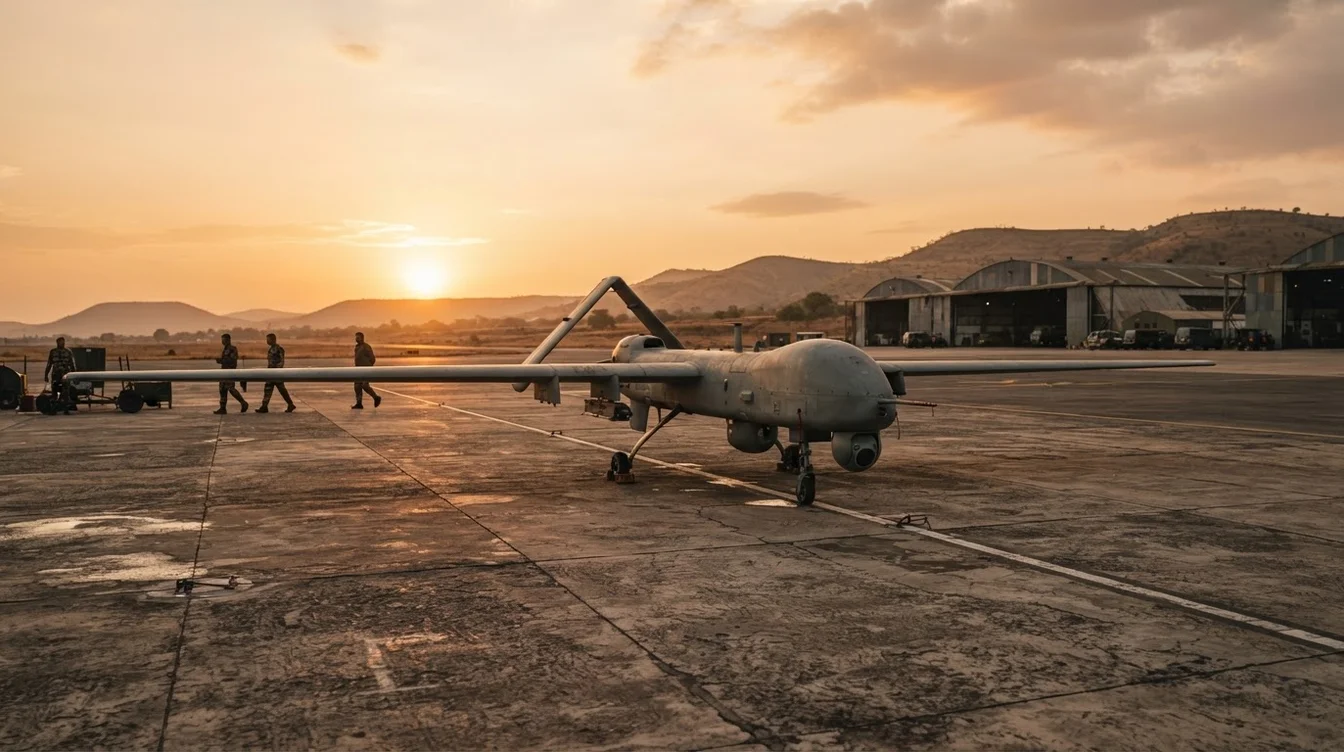
India's Sky Shield: How Indian Armed Forces are Adopting Indigenous Defence Drones Through Make in India
The skies over India are undergoing a silent revolution. As geopolitical landscapes shift and technological advancements accelerate, the role of unmanned aerial vehicles (UAVs) in national security has become paramount. India, with its vast and complex borders, diverse terrain, and strategic imperatives, is aggressively pursuing self-reliance in defence technology. At the heart of this pursuit is a concerted effort to foster the development and deployment of indigenous defence drones, a critical component of the government's "Make in India" initiative. This strategic pivot isn't just about procuring hardware; it's about building a robust domestic ecosystem for drone design, manufacturing, and operational expertise.
The move towards indigenization is driven by a clear understanding that dependency on foreign suppliers for critical defence assets can create vulnerabilities, restrict customization, and incur significant costs. By embracing indigenous solutions, the Indian armed forces are not only strengthening their operational capabilities but also nurturing a burgeoning domestic defence industry.
The Strategic Imperative: Why Indigenous Drones for India?
India's geographical realities and security challenges necessitate a proactive and self-sufficient approach to defence. The nation shares long, often contested, borders with multiple neighbours, including high-altitude terrains, deserts, and vast maritime zones. Monitoring these diverse environments effectively and continuously is a monumental task where drones offer an unparalleled advantage.
The strategic imperative for Indian armed forces adopting indigenous defence drones stems from several key factors:
- Enhanced Border Surveillance: Drones provide persistent intelligence, surveillance, and reconnaissance (ISR) capabilities, crucial for detecting infiltrations, monitoring troop movements, and securing critical infrastructure along sensitive borders.
- Reduced Import Dependency: Relying on foreign suppliers for defence equipment often comes with caveats, including technology transfer restrictions, high maintenance costs, and potential supply chain disruptions during crises. Indigenous development mitigates these risks, ensuring uninterrupted operational readiness.
- Tailored Solutions: Domestic development allows for drones to be specifically designed and optimized for India's unique operational environments, such as high-altitude operations in the Himalayas, long-endurance maritime surveillance over the Indian Ocean, or robust performance in desert conditions.
- Economic Growth and Job Creation: The "Make in India" initiative aims to transform India into a manufacturing hub. Investing in indigenous drone technology stimulates research and development, boosts local manufacturing, and creates high-skilled jobs across the aerospace and defence sectors.
- Technological Sovereignty: Developing advanced drone capabilities domestically ensures that India retains control over critical technologies, preventing potential backdoors or vulnerabilities associated with foreign-sourced systems.
This shift signifies a commitment to not just defending the nation, but to doing so with technology that is truly ours.
Make in India: Fueling Domestic Innovation and Manufacturing
The "Make in India" program has been a catalyst for unprecedented growth in India's defence manufacturing sector, particularly in UAVs. Government policies and initiatives have actively encouraged private sector participation, fostering an ecosystem where startups, MSMEs, and established defence players can innovate and contribute.
Key initiatives driving this include:
- Innovations for Defence Excellence (iDEX): Launched by the Ministry of Defence, iDEX provides a platform for startups and innovators to develop solutions for India's defence and aerospace needs. It offers grants, mentorship, and access to defence testing facilities, specifically targeting emerging technologies like drone swarms, anti-drone systems, and advanced sensor payloads.
- Defence Research and Development Organisation (DRDO): DRDO continues to be a cornerstone of indigenous defence technology, working on various UAV projects ranging from tactical surveillance drones to advanced combat aerial vehicles. Their collaboration with private industry is accelerating technology transfer and production.
- Preferential Procurement: Government policies now prioritize procurement from Indian manufacturers, providing a clear market signal and encouraging investment in domestic production capacities.
The focus is not just on assembling parts but on developing complete systems, from airframes and propulsion to advanced avionics, communication systems, and sophisticated sensor packages. This holistic approach ensures that the entire value chain remains within the country, strengthening the domestic industrial base.
Technological Advancements and Operational Readiness
The effectiveness of indigenous defence drones hinges on their technological sophistication and ability to perform reliably in demanding environments. The Indian armed forces are demanding cutting-edge capabilities, and the domestic industry is rising to the challenge.
Sensor Technology: Modern military drones are equipped with a suite of advanced sensors.
- Electro-Optical (EO) and Infrared (IR) Cameras: These provide high-resolution visual imagery during the day (EO) and thermal imaging for night or low-visibility conditions (IR), crucial for target identification and tracking.
- Synthetic Aperture Radar (SAR): This all-weather, day-night sensor can penetrate clouds and foliage, providing high-resolution ground mapping and surveillance capabilities, essential for operations in adverse weather.
- LiDAR (Light Detection and Ranging): Used for creating highly accurate 3D terrain models, vital for mission planning, navigation in complex environments, and precision targeting. The accuracy requirements for military mapping can demand sub-meter resolution for broad areas and centimetre-level precision for specific targets or reconnaissance.
- Hyperspectral Imaging: Emerging technology for detecting specific materials or changes in the environment, useful for detecting camouflage or chemical signatures.
Accuracy and Precision: For military applications, accuracy is paramount. Whether it's for target acquisition, damage assessment, or precise delivery of payloads, indigenous drones are being developed to achieve high positional accuracy, often leveraging advanced GPS/GNSS systems coupled with inertial navigation systems (INS) to maintain precision even in GPS-denied environments. Sub-meter accuracy for mapping and even higher precision for targeting is a standard expectation.
Autonomy and AI: The next generation of indigenous drones will feature advanced AI and machine learning capabilities for autonomous navigation, intelligent target recognition, swarm intelligence, and beyond visual line of sight (BVLOS) operations, reducing operator workload and increasing mission effectiveness.
Endurance and Range: For persistent surveillance and long-range reconnaissance, indigenous drones are being designed for extended flight times (e.g., 10+ hours for MALE UAVs) and significant operational ranges, often incorporating fuel-efficient engines or advanced battery technologies.
Cybersecurity and Resilience: Protecting drone systems from jamming, spoofing, and cyber-attacks is a critical design consideration, ensuring operational continuity in contested environments.
Challenges and the Path Forward
While the progress is significant, the journey of Indian armed forces adopting indigenous defence drones is not without its challenges.
- Funding and Scaling Production: Sustained and substantial investment is required for R&D, prototyping, and scaling up manufacturing to meet the large demands of the armed forces. Ensuring a consistent order book helps domestic manufacturers invest with confidence.
- Talent Gap: The specialized nature of drone technology demands a highly skilled workforce, from aerospace engineers and software developers to drone pilots and maintenance technicians. Bridging this talent gap through specialized training programs and academic collaborations is crucial.
- Regulatory Framework (DGCA Relevance): While military drones operate under a distinct framework, the broader civilian drone ecosystem, governed by the Directorate General of Civil Aviation (DGCA), significantly impacts the talent pool, component availability, and general R&D environment. Evolving DGCA policies, like the Drone Rules 2021, have streamlined civilian drone operations, indirectly fostering a more robust manufacturing and innovation base that can feed into defence applications. The regulatory clarity for civilian drones helps create a larger pool of expertise and standardized components that can be adapted for defence.
- Integration with Existing Systems: Seamlessly integrating new indigenous drones into existing command, control, communications, computers, intelligence, surveillance, and reconnaissance (C4ISR) networks of the armed forces is a complex task requiring standardized protocols and interoperability.
- Typical Timelines: Developing complex military-grade UAVs from concept to deployment can typically take 5-10 years, involving rigorous testing, certification, and user trials. However, leveraging commercial-off-the-shelf (COTS) components and agile development methodologies can accelerate the deployment of certain tactical systems.
Addressing these challenges systematically will solidify India's position as a leader in drone technology.
The Broader Impact: Civilian-Military Synergy
The drive towards indigenous defence drones has a profound spillover effect on the civilian drone industry. Advancements in military-grade sensors, robust communication systems, and autonomous flight capabilities often trickle down, making civilian drones more capable, reliable, and safer.
Companies like AiRotor Labs, which specialize in advanced drone-based services for inspections, surveys, and mapping, directly benefit from this technological push. The development of high-resolution EO/IR sensors, precise LiDAR systems, and sophisticated flight controllers for defence applications raises the bar for civilian applications. For example, the need for sub-meter accuracy in military mapping translates into highly precise aerial surveys for infrastructure projects, land management, and environmental monitoring in the civilian sector. The robust design principles required for defence drones also lead to more durable and reliable platforms for industrial inspections in challenging environments like solar farms, wind turbines, and power lines.
This synergy creates a virtuous cycle: defence innovation drives civilian advancements, and a thriving civilian drone ecosystem, in turn, provides a broader talent pool, a larger component supply chain, and a culture of innovation that can contribute back to defence needs.
Securing the Future, One Drone at a Time
The commitment of the Indian armed forces to adopting indigenous defence drones through the "Make in India" initiative represents a pivotal moment in India's defence strategy. It is a clear declaration of intent to achieve self-reliance, enhance national security, and emerge as a significant player in global defence technology. As domestic manufacturers continue to innovate and scale, India's skies will be increasingly guarded by systems designed, developed, and produced on home soil, ensuring a robust and sovereign defence posture for years to come.
AiRotor Labs is proud to be part of India's growing drone ecosystem, providing cutting-edge drone solutions for critical infrastructure inspection, aerial surveying, and precise mapping. Our expertise in leveraging advanced drone technology contributes to the broader understanding and application of these powerful tools. To learn more about our services and how we can assist your projects with high-precision drone solutions, visit us at https://www.airotor.in/booking.
AiRotor Labs provides drone-based inspection, aerial survey, and land survey across India.
Book a consultation →