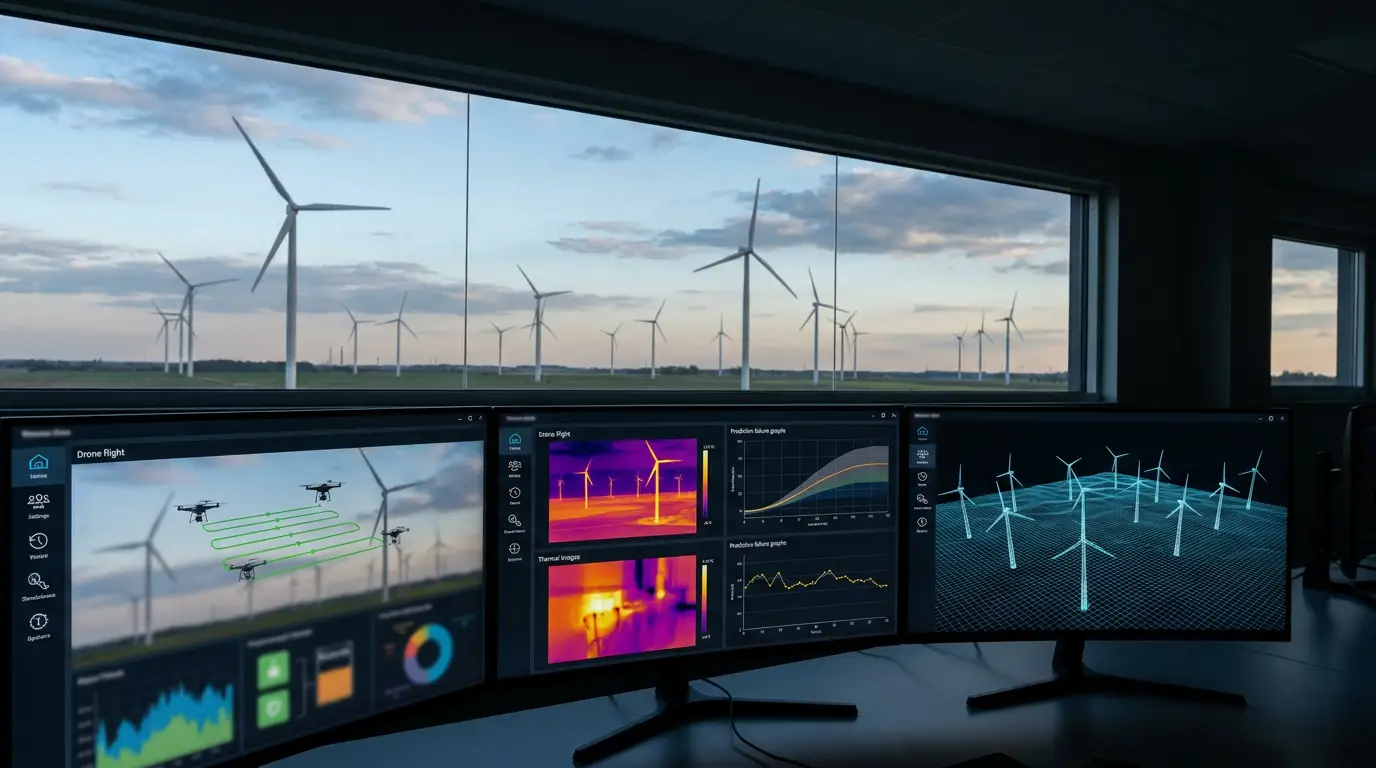
Predictive Maintenance for Wind Farms: The Power of Drone Data Combined with SCADA
Wind energy is a cornerstone of India's renewable energy ambitions. As the sector expands, ensuring the optimal performance and longevity of wind assets becomes paramount. Traditional maintenance approaches, often reactive or time-based, frequently lead to unexpected downtime, higher operational costs, and reduced energy output. This is where predictive maintenance for wind farms — combining drone data with SCADA — emerges as a game-changer, transforming how we monitor, assess, and maintain these vital structures.
At AiRotor Labs, based in Ahmedabad, we understand the unique challenges faced by wind farm operators in India. Our expertise in advanced drone-based inspections, coupled with an intelligent approach to data integration, offers a robust solution for enhancing efficiency and profitability across the wind energy lifecycle.
The Evolving Landscape of Wind Farm Maintenance in India
India's installed wind power capacity has grown significantly, placing it among the global leaders. However, operating these vast fleets of turbines across diverse and often remote terrains presents considerable challenges. Each turbine is a complex machine, susceptible to wear and tear from constant operation, environmental stresses like extreme weather, dust, and lightning strikes.
Historically, maintenance involved manual inspections, often requiring technicians to scale towering structures, a time-consuming and inherently risky task. Scheduled maintenance, while necessary, doesn't account for unpredictable failures, leading to costly emergency repairs and prolonged outages. Reactive maintenance, waiting for a failure to occur, is even more detrimental, resulting in significant revenue losses and potential secondary damage. The need for a proactive, data-driven approach has never been clearer.
Understanding Predictive Maintenance for Wind Farms
Predictive maintenance is a strategy designed to forecast equipment failures before they happen. By continuously monitoring the condition of assets and analyzing data trends, it allows operators to schedule maintenance precisely when it's needed, not too early (wasting resources) and not too late (risking failure). For wind farms, this means moving beyond simple operational checks to a deep understanding of component health and potential degradation.
The benefits are substantial:
- Reduced Downtime: Maintenance is scheduled strategically, minimizing unexpected outages.
- Optimized Maintenance Schedules: Resources are deployed efficiently, reducing labor and material costs.
- Extended Asset Lifespan: Early detection of issues prevents minor problems from escalating into major failures.
- Enhanced Safety: Fewer manual interventions in hazardous conditions.
- Increased Energy Production: Turbines operate at peak efficiency for longer periods.
Achieving true predictive maintenance requires robust, diverse data sources, and this is precisely where the synergy of drones and SCADA systems comes into play.
Drone Data: The Eyes in the Sky for Wind Turbines
Drones have revolutionized asset inspection across various industries, and wind farms are no exception. Equipped with advanced sensors, drones can capture high-resolution, precise data from every part of a wind turbine, from the foundation to the tip of the blades, without putting human personnel at risk.
AiRotor Labs employs state-of-the-art drones carrying specialized payloads:
High-Resolution RGB Cameras: These provide detailed visual data, identifying surface cracks, leading-edge erosion, lightning strike damage, paint delamination, and other external defects on blades, nacelles, and towers. Modern cameras can achieve sub-millimeter detail from safe standoff distances, allowing for precise defect mapping. A standard visual inspection of a turbine's blades typically takes 15-30 minutes per blade, depending on the drone system and defect density.
Thermal (Infrared) Cameras: Crucial for detecting anomalies invisible to the naked eye. Thermal cameras identify hotspots indicative of electrical faults, bearing overheating within the nacelle, or delamination within blade structures. They can detect temperature differentials as low as 0.05°C, providing early warnings of internal structural defects or material degradation before they become critical. Thermal inspections usually add another 10-15 minutes per blade pass.
Lidar and Photogrammetry Systems: For comprehensive 3D modeling and structural integrity assessments. Lidar (Light Detection and Ranging) creates highly accurate point clouds of the turbine and surrounding terrain, useful for detecting tower lean, foundation shifts, or even blade deformation. Photogrammetry, using overlapping high-resolution images, can also generate detailed 3D models with accuracy typically in the ±5-10mm range, vital for monitoring structural changes over time.
Safety and Compliance (DGCA Rules): All drone operations in India must strictly adhere to the Directorate General of Civil Aviation (DGCA) UAS Rules, 2021 (and subsequent amendments). This includes obtaining necessary permissions for flight operations, ensuring drones are registered, and operators hold valid Remote Pilot Certificates. AiRotor Labs operates with full DGCA compliance, prioritizing safety and legality in all our missions. A typical drone inspection mission for a wind farm would involve pre-flight planning, obtaining necessary air traffic control clearances (if required, especially near airports or restricted zones), and careful execution by certified remote pilots.
SCADA Data: The Turbine's Own Voice
SCADA (Supervisory Control and Data Acquisition) systems are the central nervous system of a wind farm. They continuously collect real-time operational data from every turbine, monitoring hundreds of parameters per second. This data provides an invaluable internal view of a turbine's health and performance.
Key parameters monitored by SCADA include:
- Rotor Speed and Power Output: Deviations can indicate aerodynamic issues or mechanical drag.
- Vibration Levels: High vibration in the gearbox, generator, or tower often signals developing mechanical faults.
- Temperatures: Monitoring temperatures of critical components like gearbox oil, generator windings, and bearings can flag overheating issues.
- Oil Pressure and Levels: Indicators of lubrication system health.
- Wind Speed and Direction: Contextual data for performance analysis.
- Pitch and Yaw Angles: Ensures blades are optimally aligned with the wind.
SCADA data is excellent for detecting symptoms of a problem – for instance, an increase in generator temperature or an abnormal vibration signature. It establishes a baseline of normal operation and flags deviations. However, SCADA alone often cannot pinpoint the exact external cause or specific location of a physical defect. It tells you something is wrong, but not always what or where it is physically manifesting.
The Synergy: Combining Drone Data with SCADA for Enhanced Predictive Maintenance
The true power of predictive maintenance for wind farms is unleashed when drone data and SCADA data are integrated and analyzed together. They are not competing technologies but complementary sources of intelligence, each providing a unique perspective that the other lacks.
Here’s how this powerful synergy works:
SCADA Flags an Anomaly: Imagine the SCADA system reports an increase in vibration levels in a specific turbine’s gearbox or a subtle but consistent drop in power output despite favorable wind conditions. This is the initial alert.
Drone Data Pinpoints the Root Cause: Instead of sending a crew to manually investigate a vague SCADA alert, a drone is deployed for a targeted inspection.
- If SCADA indicates high vibration, a drone with an RGB camera might reveal a developing crack on a blade that’s causing imbalance, or a thermal camera might pinpoint an overheating bearing not directly monitored by SCADA sensors.
- If SCADA shows reduced power output, a drone inspection might visually confirm significant leading-edge erosion on blades, or a thermal scan could detect internal delamination affecting aerodynamic efficiency.
- If SCADA shows an abnormal generator temperature, a drone's thermal camera can quickly identify if it's due to a blocked cooling vent or an external electrical issue.
Cross-Validation and Enhanced Decision Making: This combined approach allows operators to:
- Verify SCADA Alerts: Drones provide visual and thermal confirmation, reducing false positives and ensuring maintenance efforts are directed at genuine issues.
- Identify Hidden Problems: Drones can uncover external damage (e.g., small cracks, lightning strike damage) that might not immediately trigger a SCADA alert but could lead to future failures.
- Prioritize Repairs: With precise visual and thermal evidence, maintenance teams can assess the severity of defects more accurately and prioritize repairs based on actual condition rather than just operational parameters.
- Optimize Scheduling: Knowing the exact nature and location of a defect allows for better planning of parts, tools, and personnel, minimizing downtime further.
This integrated approach shifts maintenance from reactive troubleshooting to proactive, informed intervention. It provides a comprehensive, 360-degree view of turbine health, allowing wind farm operators to make data-backed decisions that extend asset life and maximize energy production.
Implementing a Combined Strategy for Indian Wind Farms
For wind farm operators in India, adopting this combined strategy involves:
- Data Integration Platforms: Utilizing software that can ingest and correlate data from both SCADA systems and drone inspection reports.
- AI/ML for Analysis: Leveraging artificial intelligence and machine learning algorithms to automatically detect anomalies from SCADA data and classify defects from drone imagery, improving speed and accuracy.
- Certified Service Providers: Partnering with experienced drone service providers like AiRotor Labs who are DGCA compliant and possess the technical expertise in both drone operations and data analysis specific to wind energy assets.
- Regular Inspection Cycles: Establishing a routine for drone inspections (e.g., annually or bi-annually, supplemented by on-demand inspections triggered by SCADA alerts).
Conclusion
The future of wind farm maintenance in India is undeniably digital and data-driven. By embracing predictive maintenance for wind farms — combining drone data with SCADA, operators can move beyond traditional, often inefficient methods. This powerful synergy not only enhances operational efficiency and safety but also significantly reduces costs and maximizes the energy output of your valuable wind assets.
At AiRotor Labs, we are committed to empowering India's renewable energy sector with cutting-edge drone technology and intelligent data solutions. From detailed inspections to comprehensive aerial surveys, we provide the insights you need to keep your wind farms operating at their peak.
Ready to revolutionize your wind farm maintenance strategy? Visit https://www.airotor.in/booking to discuss how AiRotor Labs can help you implement advanced predictive maintenance solutions.
AiRotor Labs provides drone-based inspection, aerial survey, and land survey across India.
Book a consultation →