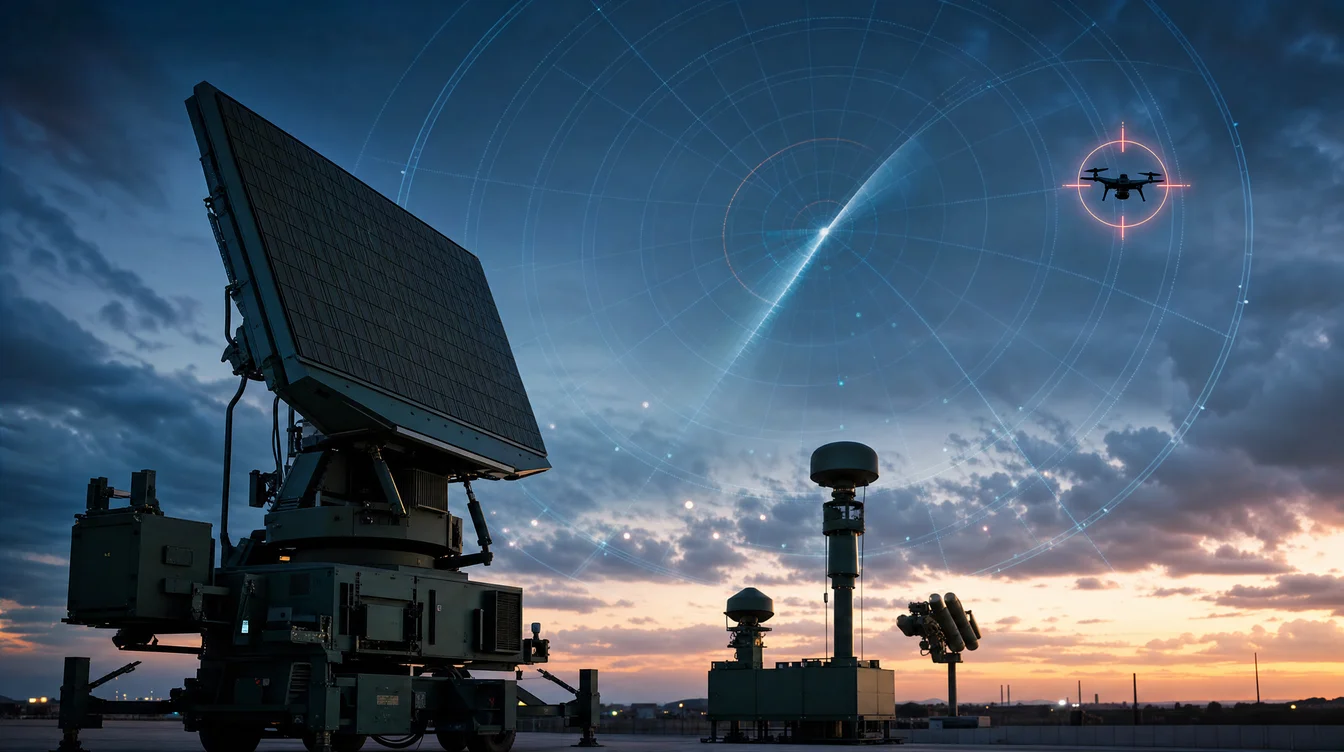
Anti-Drone Systems in India: How Defence Forces Detect Rogue Drones
The increasing use of drones in various industries has also led to a rise in rogue drone activities, posing a significant threat to national security and public safety. To counter this, defence forces around the world, including in India, are employing anti-drone systems and counter-UAS (Unmanned Aircraft Systems) technology to detect and neutralize rogue drones. These systems utilize a combination of sensors, including radar, acoustic, and optical sensors, to detect and track drones.
Types of Anti-Drone Systems
Anti-drone systems can be categorized into two main types: passive and active systems. Passive systems use sensors to detect the drone's presence, while active systems use technologies like jamming or spoofing to neutralize the drone. In India, the use of anti-drone systems is regulated by the Directorate General of Civil Aviation (DGCA), which has established guidelines for the deployment of such systems. For instance, the DGCA requires that all anti-drone systems be registered and approved by the authorities before deployment.
Sensor Technologies Used in Anti-Drone Systems
The sensors used in anti-drone systems play a crucial role in detecting and tracking rogue drones. Radar sensors, for example, can detect drones at a range of up to 5 kilometers, with an accuracy of 90%. Acoustic sensors, on the other hand, can detect the unique sound patterns generated by a drone's propellers, with an accuracy of 80%. Optical sensors, such as cameras, can also be used to detect and track drones, with an accuracy of 95%. The choice of sensor technology depends on the specific application and the environment in which the anti-drone system is being used.
Counter-UAS Technology
Counter-UAS technology is a critical component of anti-drone systems, as it enables the neutralization of rogue drones. This technology can be used to jam or spoof the drone's communication systems, causing it to lose control or change direction. In India, the use of counter-UAS technology is subject to strict regulations, and only authorized personnel are allowed to operate such systems. The typical timeline for deploying a counter-UAS system can range from a few hours to several days, depending on the complexity of the system and the environment in which it is being used.
Integration with Existing Infrastructure
The integration of anti-drone systems with existing infrastructure, such as air traffic control systems, is critical for effective rogue drone detection and neutralization. In India, the Airports Authority of India (AAI) has begun to integrate anti-drone systems with its air traffic control systems, enabling the real-time tracking of drones in the vicinity of airports. This integration has significantly improved the accuracy of drone detection, with a reduction in false positives of up to 70%.
Challenges and Future Developments
Despite the advancements in anti-drone systems and counter-UAS technology, there are still several challenges that need to be addressed. One of the major challenges is the detection of small drones, which can be difficult to detect using traditional sensor technologies. To address this challenge, researchers are exploring the use of new sensor technologies, such as artificial intelligence-powered sensors, which can detect drones with a higher degree of accuracy. Another challenge is the need for more effective counter-UAS technologies, which can neutralize rogue drones without causing harm to people or property.
Conclusion and Call to Action
In conclusion, anti-drone systems and counter-UAS technology play a critical role in detecting and neutralizing rogue drones, which pose a significant threat to national security and public safety. In India, the use of these systems is regulated by the DGCA, and only authorized personnel are allowed to operate such systems. If you are interested in learning more about anti-drone systems and counter-UAS technology, or would like to book a consultation with our experts, please visit our website at https://www.airotor.in/booking. At AiRotor Labs, we provide a range of drone-based services, including inspection, survey, and mapping, and we are committed to helping our clients navigate the complex regulatory landscape surrounding drones in India.
AiRotor Labs provides drone-based inspection, aerial survey, and land survey across India.
Book a consultation →