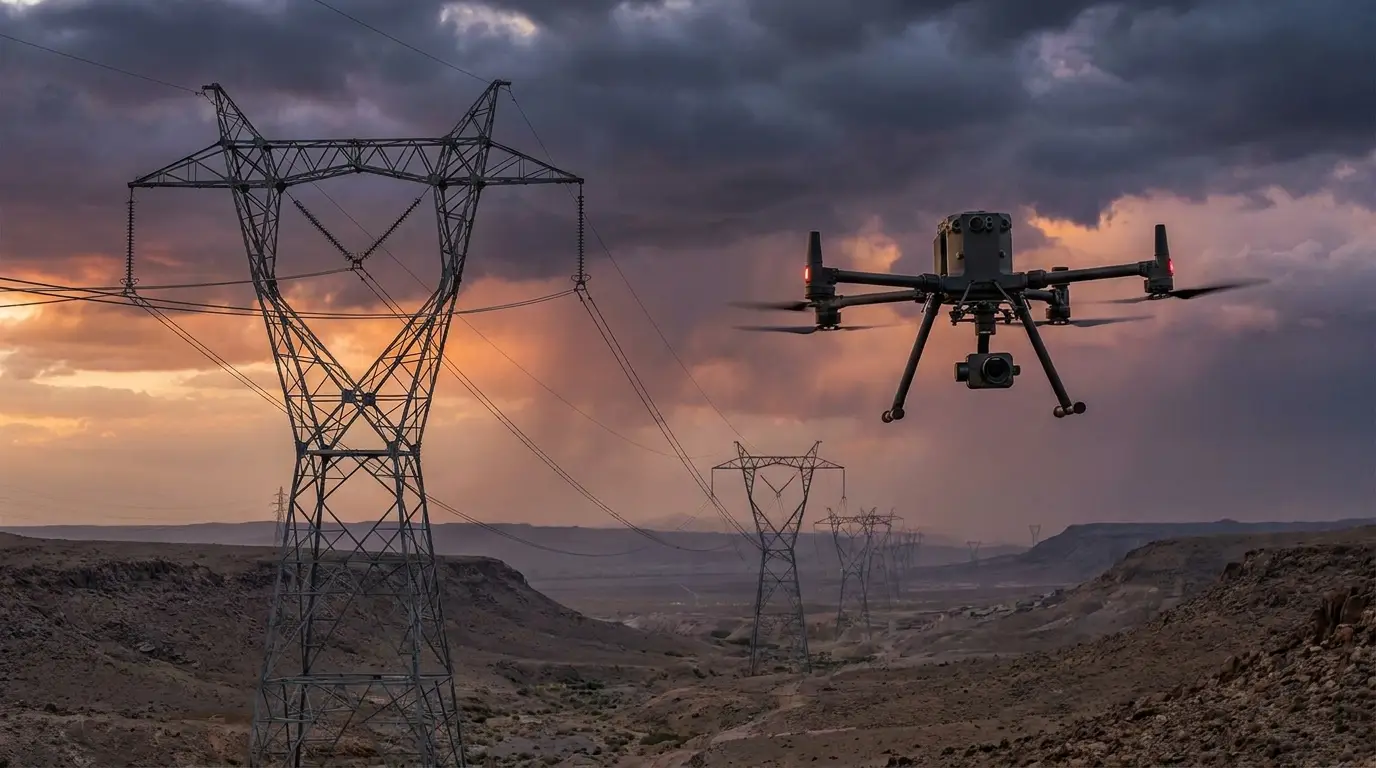
How Drone-Based Transmission Line Inspection Reduces Powerline Faults
India's energy landscape is expanding rapidly, with a colossal network of transmission lines stretching across diverse and often challenging terrains. This vast infrastructure is the lifeline of our economy, but its maintenance presents significant hurdles. Powerline faults – from simple wire breaks to complex insulator failures – can lead to costly downtime, revenue losses, and disruptions for millions. Traditionally, inspecting these lines has been a dangerous, time-consuming, and often incomplete process.
Looking for a provider? AiRotor Labs offers transmission line drone inspection services across India — thermal, LiDAR and corona inspection of live lines, ₹5,000–₹15,000 per km.
However, the advent of advanced drone technology is transforming this critical sector. Drone-based transmission line inspection offers an unprecedented level of safety, efficiency, and accuracy, fundamentally changing how power utilities identify, mitigate, and prevent powerline faults. At AiRotor Labs, operating out of Ahmedabad, we're at the forefront of deploying these cutting-edge solutions across India, ensuring a more reliable and resilient power grid.
The Inherent Challenges of Traditional Powerline Inspection
Before drones, inspecting transmission lines primarily relied on ground patrols, helicopter fly-bys, or linemen physically climbing towers. Each method carries substantial drawbacks:
- Safety Risks: Linemen face extreme hazards, including working at heights, exposure to high voltage, and navigating treacherous terrain. Helicopter inspections, while faster, come with their own set of aviation risks and high operational costs.
- Time and Labor Intensive: Manually inspecting thousands of kilometers of lines is incredibly slow. Ground teams can only cover limited distances daily, and detailed inspections often require multiple days per tower. This means faults can go undetected for longer periods.
- Limited Accessibility: Many transmission lines traverse dense forests, mountainous regions, deserts, or agricultural lands that are difficult or impossible to access by vehicle or foot. This leaves significant portions of the network uninspected or poorly monitored.
- Subjectivity and Incomplete Data: Human visual inspections can be subjective, prone to error, and limited by perspective. It's difficult to consistently capture detailed, geo-referenced data across an entire network, making trend analysis and predictive maintenance challenging.
- Environmental Impact: Helicopters generate noise pollution and have a larger carbon footprint compared to electric drones.
These challenges collectively contribute to delayed fault detection, prolonged repair times, and ultimately, more frequent and extended power outages.
How Drone Technology Revolutionizes Transmission Line Inspection
Drones offer a paradigm shift, addressing the inherent limitations of traditional methods head-on. By leveraging unmanned aerial vehicles (UAVs), power utilities can achieve:
- Enhanced Safety: Drones eliminate the need for personnel to work at dangerous heights or in close proximity to live lines. Inspections are conducted remotely, significantly reducing the risk of accidents and fatalities.
- Unmatched Efficiency and Speed: A single drone team can inspect dozens of kilometers of transmission lines in a day, completing tasks that would take ground crews weeks. This drastically reduces inspection cycles, allowing for more frequent monitoring.
- Superior Accessibility: Drones can effortlessly navigate over rivers, through dense foliage, and around difficult terrain, reaching every part of the transmission network with precision.
- Consistent, High-Quality Data: Drones capture objective, geo-tagged, and repeatable data. This consistency is crucial for accurate fault identification, trend analysis, and building a comprehensive digital twin of the transmission infrastructure.
- Cost-Effectiveness: While initial investment exists, the long-term operational savings from reduced labor, faster inspections, and proactive maintenance often outweigh traditional methods, especially considering the cost of power outages.
In India, all commercial drone operations, including drone-based transmission line inspection, must comply with the Directorate General of Civil Aviation (DGCA) regulations. This includes obtaining a Unique Identification Number (UIN) for the drone, a Remote Pilot Certificate for the operator, and adhering to specific flight rules and airspace restrictions. AiRotor Labs ensures full compliance with all DGCA guidelines, guaranteeing safe and legal operations.
Advanced Sensors: The Eyes and Ears of Fault Detection
The true power of drone inspection lies in the sophisticated payloads they carry. These advanced sensors provide a holistic view of the transmission line's health, identifying a wide array of potential faults invisible to the naked eye:
- High-Resolution RGB Cameras: These provide detailed visual documentation of physical defects. We use cameras capable of capturing images with sub-centimeter ground sample distance (GSD), allowing us to identify issues like broken conductor strands, corroded hardware, damaged insulators, bird nests, foreign objects, and vegetation encroachment. This visual data is critical for assessing the structural integrity of towers and lines.
- Thermal (Infrared) Cameras: Perhaps one of the most vital tools, thermal cameras detect minute temperature variations. Hot spots indicate electrical resistance issues such as loose connections, overloaded conductors, failing splices, or degraded insulators. These anomalies are often precursors to major failures. Our thermal cameras can detect temperature differences as small as 0.05°C, enabling early detection of overheating components before they cause an outage.
- LiDAR (Light Detection and Ranging): LiDAR technology creates highly accurate 3D point clouds of the transmission corridor. This data is indispensable for:
- Vegetation Management: Precisely identifying vegetation encroachment that could lead to flashovers, especially crucial during India's monsoon season. LiDAR can map vegetation with vertical accuracies typically within 5-10 cm.
- Sag and Clearance Analysis: Measuring conductor sag and ensuring adequate clearance from ground, structures, and other lines, preventing potential arc faults.
- Structure Deformation Detection: Monitoring subtle shifts or damage in tower structures.
- Corona Cameras (UV Cameras): These specialized cameras detect ultraviolet light emitted by partial discharges (corona activity) around high-voltage components. Corona discharge indicates insulation degradation, surface contamination, or defects that can lead to eventual electrical breakdown. Identifying corona allows for proactive replacement of faulty insulators or components, preventing catastrophic failures.
By combining data from these sensors, we create a comprehensive diagnostic picture, allowing utilities to move from reactive repairs to predictive maintenance.
From Data Capture to Proactive Fault Prevention
The process of drone-based transmission line inspection doesn't end with data collection. The real value comes from transforming this raw data into actionable insights that directly reduce powerline faults:
- Efficient Data Acquisition: Drones equipped with multi-sensor payloads can cover 20-30 km of transmission line per day, depending on terrain and line complexity. This significantly reduces the time required for comprehensive inspections.
- Advanced Data Processing & Analysis: The massive datasets collected (thousands of images, thermal videos, LiDAR point clouds) are processed using specialized software. We employ AI and machine learning algorithms to automate defect identification, categorizing and prioritizing anomalies such as corrosion, broken components, vegetation infringements, and thermal hot spots. This reduces human analysis time and improves accuracy.
- Detailed Reporting & Geo-referencing: Clients receive detailed, geo-referenced reports that pinpoint the exact location of every identified anomaly. Each defect is categorized by severity, allowing utilities to prioritize repairs. For instance, a critical hot spot identified by a thermal camera will be flagged for immediate attention, while minor corrosion might be scheduled for routine maintenance. Typically, field data can be processed and a comprehensive report generated within 3-7 business days, depending on the scale of the project.
- Predictive Maintenance: By regularly collecting and analyzing data, utilities can track the degradation of components over time. This enables a shift from reactive "fix-it-when-it-breaks" maintenance to a predictive model where potential failures are anticipated and addressed before they cause an outage. For example, consistent monitoring of vegetation growth through LiDAR data helps schedule trimming proactively, avoiding flashovers. Similarly, tracking the progression of thermal anomalies allows for timely replacement of faulty connectors.
- Reduced Downtime and Costs: By identifying and addressing faults before they escalate, utilities significantly reduce the frequency and duration of power outages. This not only saves millions in lost revenue but also enhances grid reliability and public satisfaction. The cost of a major fault and subsequent outage far outweighs the investment in proactive drone inspections.
The Indian Advantage: AiRotor Labs for a Resilient Grid
For India's power utilities, the advantages of drone inspection are particularly pronounced. Our diverse geography, from the Himalayas to the Thar Desert, poses unique challenges that drones are uniquely suited to overcome. During the intense monsoon season, drones can rapidly assess storm damage and identify vulnerable sections, accelerating restoration efforts. As India pushes for a smarter, more resilient grid, adopting advanced solutions like drone-based transmission line inspection is not just an option, but a necessity.
AiRotor Labs, based in Ahmedabad, is committed to empowering Indian power utilities with these transformative capabilities. Our expert team, state-of-the-art drone fleet, and advanced data analytics ensure that your transmission lines are inspected with unparalleled precision, safety, and efficiency. By partnering with us, you invest in a future with fewer powerline faults, reduced operational costs, and a more reliable power supply for the nation.
Ready to enhance the reliability and safety of your power infrastructure? Contact AiRotor Labs today to discuss your specific transmission line inspection needs. Our team is ready to provide tailored solutions that leverage the latest drone technology to safeguard your assets and ensure uninterrupted power.
Learn more about our transmission line inspection services, or book your drone inspection with AiRotor Labs at https://www.airotor.in/booking.
AiRotor Labs provides drone-based inspection, aerial survey, and land survey across India.
Book a consultation →