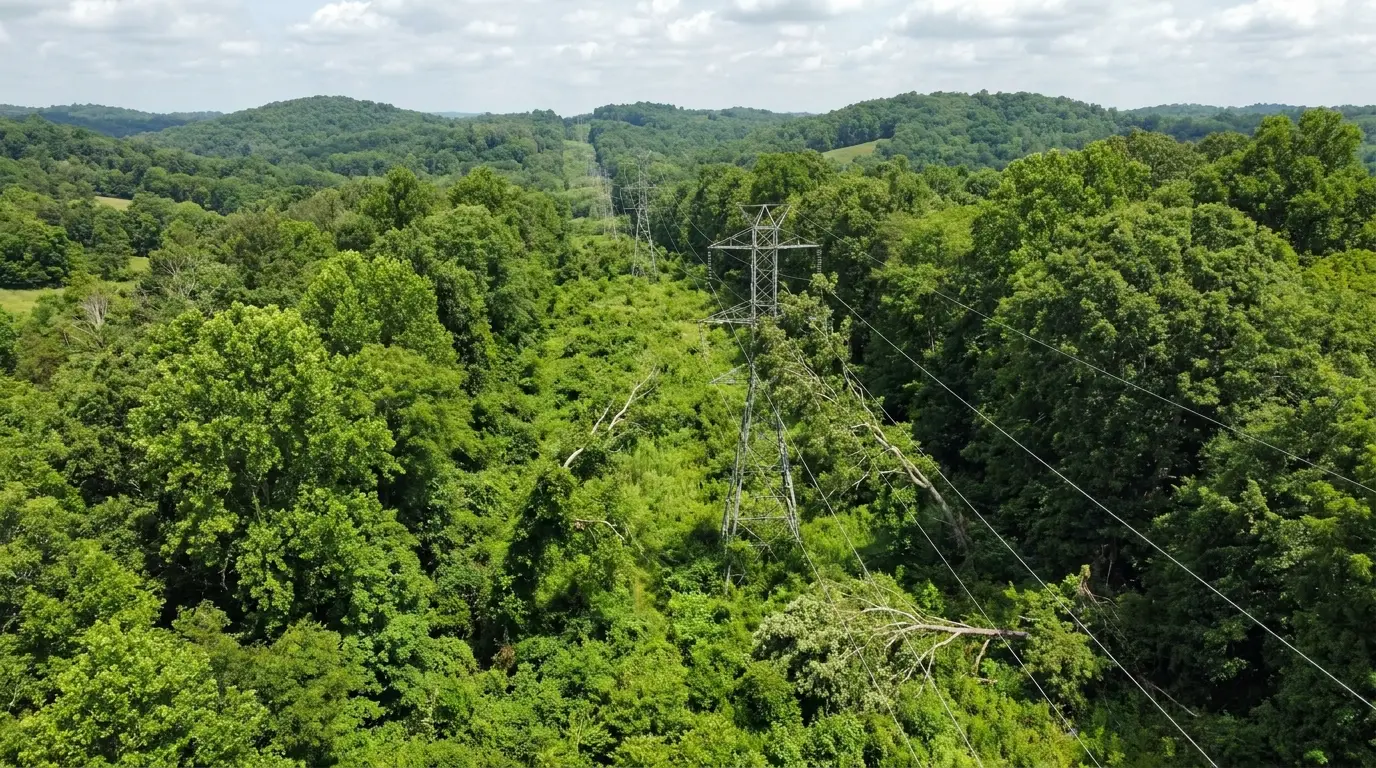
Enhancing Powerline Right-of-Way Vegetation Management Using Drones
Maintaining the integrity and reliability of India's vast power transmission and distribution network is a monumental task. A critical component of this is ensuring that vegetation within the powerline right-of-way (ROW) is managed effectively. Uncontrolled growth can lead to costly outages, safety hazards, and even wildfires, especially in diverse Indian terrains and weather conditions. Traditionally, this has been a labour-intensive, time-consuming, and often dangerous process, relying heavily on ground crews and manual inspections.
Looking for a provider? AiRotor Labs offers transmission line drone inspection services across India — thermal, LiDAR and corona inspection of live lines, ₹5,000–₹15,000 per km.
However, the advent of drone technology is fundamentally transforming how utility companies approach this challenge. By leveraging advanced aerial platforms and sophisticated sensors, companies can now achieve unprecedented levels of efficiency, accuracy, and safety in powerline right-of-way vegetation management. AiRotor Labs, based in Ahmedabad, is at the forefront of deploying these innovative solutions across India, helping infrastructure managers safeguard their assets and ensure uninterrupted power supply.
The Critical Need for Proactive ROW Vegetation Management in India
India's power grid spans millions of kilometers, traversing everything from dense urban areas to remote forests, agricultural lands, and mountainous regions. In this varied landscape, vegetation growth rates can differ dramatically, exacerbated by monsoon seasons which accelerate growth and increase the risk of tree-related faults.
The consequences of inadequate vegetation management are severe:
- Power Outages: Trees encroaching on powerlines are a leading cause of short circuits, tripping, and widespread blackouts, impacting industries, homes, and critical services.
- Safety Hazards: Live powerlines coming into contact with vegetation pose electrocution risks to both the public and maintenance personnel.
- Fire Risk: Dry vegetation near powerlines is a significant fire hazard, especially during India's hot summer months, threatening lives, property, and natural ecosystems.
- Increased Maintenance Costs: Reactive maintenance (emergency repairs) is far more expensive than planned, preventive measures.
- Regulatory Compliance: Utility companies are bound by stringent regulations to maintain specific clearance distances around powerlines, and non-compliance can lead to penalties.
Traditional methods involving ground patrols, manual trimming, and visual line-of-sight inspections are often slow, expensive, expose workers to hazards, and provide inconsistent data. This makes it challenging to identify and prioritize high-risk areas effectively, leading to a reactive rather than proactive approach to vegetation management.
How Drones Revolutionize Powerline Right-of-Way Vegetation Management
Drones offer a paradigm shift, enabling utility companies to move beyond traditional methods and adopt a data-driven, predictive strategy for vegetation control. By deploying Unmanned Aerial Vehicles (UAVs), inspections that once took weeks or months can now be completed in a fraction of the time, with superior data quality and significantly enhanced safety.
The core advantages of using drones for powerline right-of-way vegetation management include:
- Enhanced Safety: Eliminates the need for human personnel to work at heights or in close proximity to live wires and hazardous terrain.
- Unparalleled Efficiency: Drones can cover vast stretches of powerline corridors rapidly, gathering comprehensive data on vegetation encroachment. A single drone team can inspect 5-10 kilometers of transmission line per day, far exceeding manual capabilities.
- Superior Data Quality: High-resolution sensors capture detailed visual, spatial, and spectral data, providing a complete picture of the ROW.
- Cost Reduction: Optimizes resource allocation by identifying precise areas needing intervention, reducing unnecessary trimming and lowering operational expenses.
- Proactive Planning: Enables utility companies to forecast vegetation growth, plan maintenance cycles more effectively, and prevent issues before they occur.
This shift allows for the creation of digital twins of the powerline corridor, where vegetation growth can be monitored over time, growth rates can be modeled, and potential threats can be flagged automatically.
The Technology Underpinning Drone-Based Vegetation Management
The effectiveness of drone-based powerline right-of-way vegetation management hinges on the sophisticated technology integrated into these aerial platforms.
Advanced Sensor Payloads:
- LiDAR (Light Detection and Ranging): This is arguably the most critical sensor for precise vegetation management. LiDAR scanners emit laser pulses to create highly accurate 3D point clouds of the terrain, powerlines, and vegetation. This data allows for centimeter-level measurement of vegetation height, canopy density, and crucially, the exact clearance distance between powerlines and nearby trees. It can penetrate dense foliage to map the ground beneath, providing invaluable data for identifying species prone to rapid growth.
- High-Resolution RGB Cameras: Providing visual context, these cameras capture detailed orthomosaics and 3D models of the corridor. They are excellent for identifying specific tree species, assessing overall vegetation health, and documenting the extent of encroachment.
- Multispectral/Hyperspectral Cameras: These sensors capture data across various light spectrums, revealing insights into vegetation health, stress levels, and even species identification based on their unique spectral signatures. This helps in identifying fast-growing or invasive species that require targeted treatment.
- Thermal Cameras: While less common for direct vegetation height, thermal cameras can detect hot spots on powerlines due to resistive heating, which could be exacerbated by vegetation contact, or identify stressed vegetation that might be prone to falling.
Data Processing and Analytics:
Raw drone data is processed using specialized software that leverages Artificial Intelligence (AI) and Machine Learning (ML) algorithms. These algorithms can automatically:
- Classify Objects: Differentiate between powerlines, support structures, ground, and various types of vegetation.
- Measure Clearance: Automatically calculate the precise distances between conductors and surrounding trees.
- Identify Encroachment: Pinpoint areas where vegetation violates safety clearance zones.
- Monitor Growth: Track vegetation growth patterns over time, allowing for predictive modeling.
- Generate Reports: Create actionable reports, detailed maps, and 3D models for maintenance planning.
The output typically includes high-resolution orthomosaics, classified 3D point clouds, Digital Terrain Models (DTM), Digital Surface Models (DSM), and detailed vegetation encroachment reports, all integrated into a Geographic Information System (GIS) for comprehensive asset management.
The AiRotor Labs Advantage: Precision, Safety, and Compliance in India
AiRotor Labs brings extensive expertise and state-of-the-art technology to powerline right-of-way vegetation management across India. Our approach combines cutting-edge drone platforms with skilled pilots and advanced data analytics to deliver unparalleled results.
- Uncompromised Safety: Our drone operations eliminate the need for manual inspection crews to traverse dangerous terrain or work near live wires, significantly reducing human risk.
- Exceptional Accuracy: Utilizing high-precision RTK/PPK-enabled drones with LiDAR sensors, we achieve centimeter-level accuracy in mapping vegetation encroachment. This precision ensures that trimming efforts are targeted and efficient, preventing over-clearing or under-clearing.
- Operational Efficiency: We can survey hundreds of kilometers of powerline corridors in a fraction of the time compared to traditional methods. Our efficient data capture and processing workflows mean faster insights and quicker decision-making for utility managers.
- Cost-Effectiveness: By providing precise data on where and when vegetation management is needed, we help optimize maintenance schedules, reduce labor costs, and prevent costly emergency repairs, leading to significant long-term savings.
- DGCA Compliance: AiRotor Labs operates strictly within the guidelines set by the Directorate General of Civil Aviation (DGCA) under India's Unmanned Aircraft System Rules, 2021 (and subsequent amendments). All our pilots are certified, drones are registered, and flight permissions are obtained, ensuring legal and safe operations. We are well-versed in the regulations pertaining to Visual Line of Sight (VLOS) and Beyond Visual Line of Sight (BVLOS) operations, adapting our strategies to meet project requirements while adhering to the highest safety standards.
- Tailored for the Indian Market: We understand the unique challenges posed by India's diverse climate, rapid vegetation growth (especially post-monsoon), and varied terrain. Our solutions are customized to address these specific conditions, providing robust and reliable data for effective decision-making.
Beyond Detection: Predictive Maintenance and Optimized Strategies
The true power of drone-based data extends beyond merely detecting existing encroachment. It enables utility companies to adopt a sophisticated, predictive approach to vegetation management.
By analyzing historical growth patterns, species data, and environmental factors, our analytics can help predict where and when vegetation is likely to become an issue in the future. This allows for:
- Condition-Based Maintenance: Moving away from rigid, calendar-based trimming schedules to a more efficient system where maintenance is performed only when and where it is truly needed.
- Targeted Remediation: Identifying specific problematic species or areas that require more frequent or aggressive treatment, optimizing resource deployment and potentially reducing the reliance on broad-spectrum herbicides.
- Long-Term Planning: Developing comprehensive vegetation management plans that consider ecological impacts, minimize environmental disruption, and ensure sustainable practices.
- Resource Optimization: Efficient allocation of ground crews and equipment to specific high-risk zones, maximizing their impact and reducing unproductive deployments.
By consistently applying drone technology for powerline right-of-way vegetation management, utility providers can not only enhance the safety and reliability of their infrastructure but also significantly reduce operational costs and improve environmental stewardship.
Ready to enhance the reliability and safety of your power infrastructure with cutting-edge drone technology? Contact AiRotor Labs today to discuss your specific requirements and discover how our drone services can transform your vegetation management strategy.
Contact AiRotor Labs for a Drone Service Consultation
AiRotor Labs provides drone-based inspection, aerial survey, and land survey across India.
Book a consultation →